 EN
EN ES
ES AR
AR











_converted.avif)


_converted.avif)


BLOG DETAIL
How Universal Commerce Protocol (UCP) Is Shaping the Future of AI Native Commerce

Raja Moorthy
May 20, 2026 | 207 Views | 2 Min Read
Discover how Universal Commerce Protocol (UCP) is transforming AI-native commerce through open standards, machine-readable discovery, and merchant-owned infrastructure.
Commerce discovery is evolving rapidly.
For years, digital commerce has been heavily dependent on centralized marketplaces, advertising platforms, and search ecosystems to connect buyers and sellers. Visibility was often controlled by algorithms, paid placements, and platform-driven ecosystems.
But AI is beginning to reshape that model.
The transformation is no longer limited to how products are sold. It is changing how commerce itself is discovered, understood, and executed.
One of the strongest early signals of this shift is the emergence of Universal Commerce Protocol (UCP).
Understanding Universal Commerce Protocol (UCP)
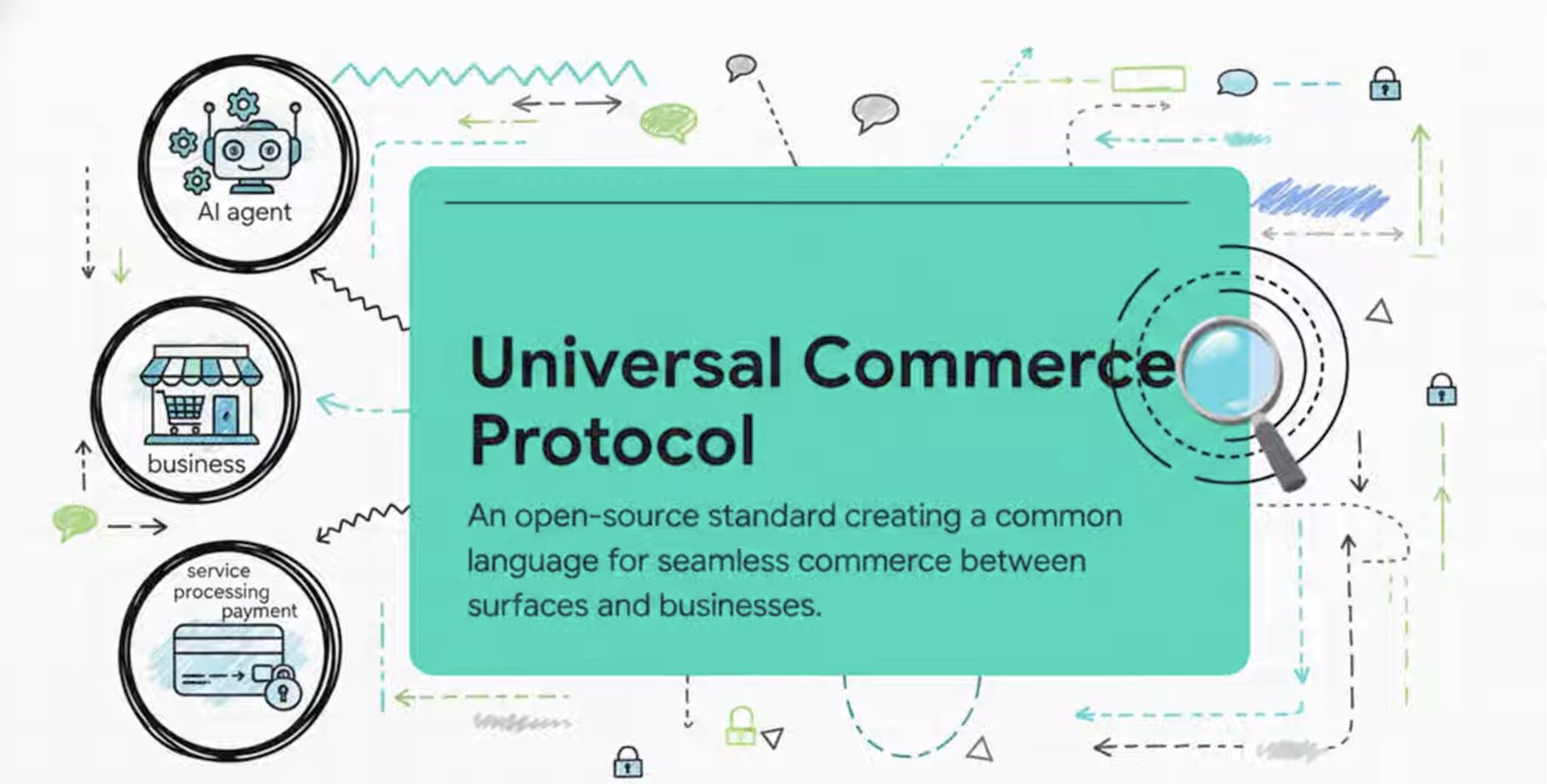
Universal Commerce Protocol (UCP) introduces the idea of open, machine-readable commerce discovery.
Through endpoints such as /.well-known/ucp, merchants can publish their commerce capabilities in a structured format that AI systems and external services can understand directly.
This creates a very different commerce environment.
Instead of depending entirely on centralized platforms for visibility, AI agents can independently discover stores, products, workflows, and merchant capabilities across the open web.
This represents a shift from platform-controlled commerce toward protocol-driven commerce.
The Rise of AI Native Commerce
Traditional ecommerce systems were designed primarily for human interaction.
Customers manually searched for products, compared options, and completed transactions themselves.
AI native commerce changes this model completely.
AI agents are becoming capable of:
• Discovering products automatically
• Understanding merchant capabilities
• Comparing offers across platforms
• Applying customer preferences and constraints
• Participating in negotiation and checkout workflows
Commerce is gradually moving from human-driven interaction toward machine-assisted and machine-executed workflows.
This transition has significant implications for how commerce infrastructure must evolve.
Why Open Standards Matter Again
The rise of AI-native commerce strongly favors systems built on open standards.
Platforms that are:
• Open-source
• Self-hosted
• Headless
• API-first
are naturally better positioned for this transition.
Why?
Because merchants need direct ownership and control over their infrastructure in order to participate effectively in protocol-driven commerce ecosystems.
In this model, merchants control:
• Their infrastructure
• Their commerce manifests
• Their pricing logic
• Their negotiation workflows
• Their checkout experiences
Not centralized platforms.
Not intermediaries.
This creates a more open and interoperable commerce environment.
Commerce Is Moving Beyond Closed Ecosystems
For years, centralized platforms controlled product discovery and customer access.
But protocol-driven commerce changes how visibility works.
If AI agents can discover merchant capabilities directly through standardized protocols like UCP, businesses are no longer entirely dependent on closed marketplace ecosystems.
This creates new opportunities for:
• Merchant-owned commerce infrastructure
• Open interoperability between systems
• Direct machine-to-machine discovery
• Flexible and decentralized commerce experiences
The internet itself becomes more commerce-aware.
This Is More Than an Integration Trend
The rise of UCP is not simply another API integration pattern.
It represents a deeper architectural evolution.
The web is becoming increasingly machine-readable and protocol-driven.
Future commerce protocols may eventually support:
• Discovery
• Product understanding
• Negotiation
• Trust validation
• Transaction orchestration
directly at the infrastructure layer.
This could fundamentally change how digital commerce operates over the next decade.
The Spurtcommerce Perspective
At Spurtcommerce, the future of commerce is viewed as:
• Open by default
• Merchant-owned
• Headless and API-first
• Protocol-friendly
• Infrastructure-driven
As AI-native commerce continues to evolve, platforms must support interoperability, extensibility, and machine-readable commerce systems.
This is why modern commerce infrastructure must move beyond traditional monolithic architectures.
The next generation of commerce platforms must be capable of supporting:
• AI-driven discovery
• Asynchronous workflows
• Open commerce protocols
• Machine-to-machine communication
• Flexible integration layers
Because future commerce ecosystems may be shaped more by protocols than platforms.
The Return of the Open Web
The internet originally grew through open standards and interoperable protocols.
Over time, commerce became increasingly concentrated inside closed ecosystems and centralized marketplaces.
AI-native commerce protocols like UCP may begin shifting commerce back toward openness.
The direction is still early.
But the signal is becoming increasingly clear.
The future of commerce is moving toward:
• Open discovery
• Merchant-owned infrastructure
• Machine-readable systems
• Protocol-driven interoperability
Platforms that embrace this shift early will be better positioned for the next evolution of digital commerce.
Conclusion
Universal Commerce Protocol (UCP) is more than a technical specification.
It is an early indicator of how AI-native commerce may evolve.
As AI agents become more capable of discovering, evaluating, and interacting with commerce systems autonomously, infrastructure will become increasingly important.
The future of commerce will not belong only to platforms with the most features.
It will belong to systems that are:
• Open
• Interoperable
• Extensible
• Machine-ready
Because commerce is no longer just becoming digital.
It is becoming protocol-native.

 Available